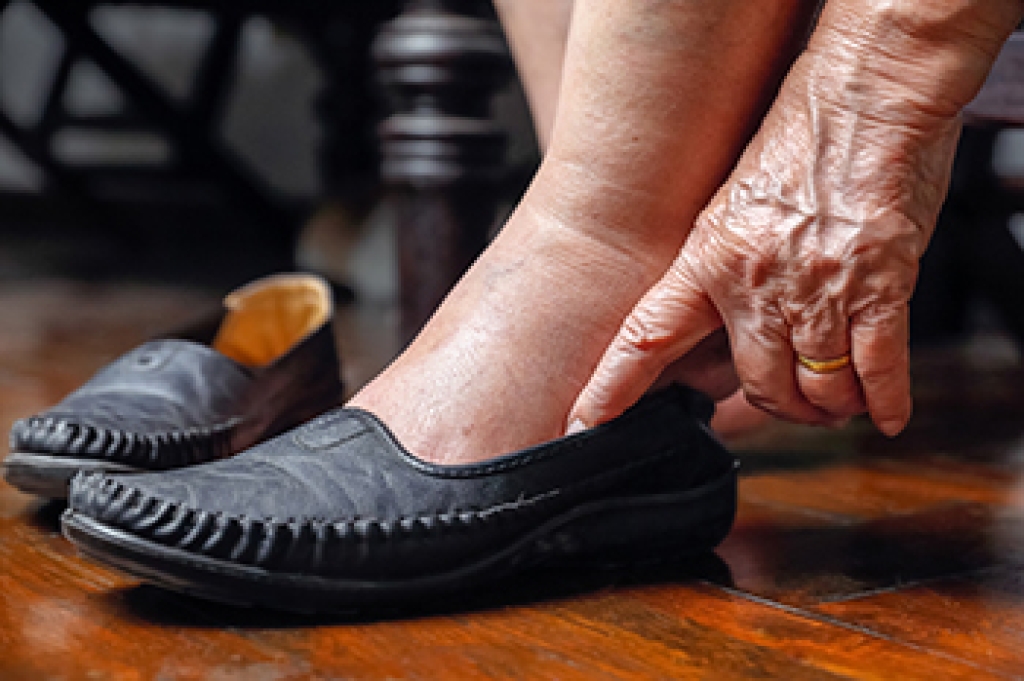
People living with type 2 diabetes face a higher risk for skin breakdown on the feet because circulation, sensation, and pressure tolerance can be changed. Footwear plays a quiet but powerful role in prevention. Shoes that fit well reduce friction, limit pressure points, and protect vulnerable skin from repeated trauma. A deep toe box, soft interior linings, and firm heel support help distribute weight more evenly during walking. Cushioning absorbs shock, while stable soles improve balance and reduce shear forces. Breathable materials help manage moisture, lowering the chance of irritation or infection. Worn out shoes or poorly fitting styles can create rubbing that leads to blisters, calluses, and open areas or wounds that heal slowly. Choosing shoes with professional guidance and replacing them regularly supports daily foot protection. If redness, sores, pressure areas, or wounds appear on your feet, it is suggested that you see a podiatrist who can provide the necessary treatment.
Wound care is an important part in dealing with diabetes. If you have diabetes and a foot wound or would like more information about wound care for diabetics, consult with one of our podiatrists from Foot & Ankle Associates of Maine. Our doctors will assess your condition and provide you with quality foot and ankle treatment.
What Is Wound Care?
Wound care is the practice of taking proper care of a wound. This can range from the smallest to the largest of wounds. While everyone can benefit from proper wound care, it is much more important for diabetics. Diabetics often suffer from poor blood circulation which causes wounds to heal much slower than they would in a non-diabetic.
What Is the Importance of Wound Care?
While it may not seem apparent with small ulcers on the foot, for diabetics, any size ulcer can become infected. Diabetics often also suffer from neuropathy, or nerve loss. This means they might not even feel when they have an ulcer on their foot. If the wound becomes severely infected, amputation may be necessary. Therefore, it is of the upmost importance to properly care for any and all foot wounds.
How to Care for Wounds
The best way to care for foot wounds is to prevent them. For diabetics, this means daily inspections of the feet for any signs of abnormalities or ulcers. It is also recommended to see a podiatrist several times a year for a foot inspection. If you do have an ulcer, run the wound under water to clear dirt from the wound; then apply antibiotic ointment to the wound and cover with a bandage. Bandages should be changed daily and keeping pressure off the wound is smart. It is advised to see a podiatrist, who can keep an eye on it.
If you have any questions please contact our office located in Brunswick, ME . We offer the newest diagnostic and treatment technologies for all your foot and ankle needs.
